AI Video Ads: How to Test Creative at Volume
Creative volume is the biggest lever in paid social. Here is how to use AI video to produce and test dozens of variations without a shoot.
In paid social, the account that tests more creative usually wins. Not the one with the best targeting, and rarely the one with the prettiest production. Creative volume is the constraint, and production cost is what caps volume.
AI video removes the cap.
Why volume beats polish
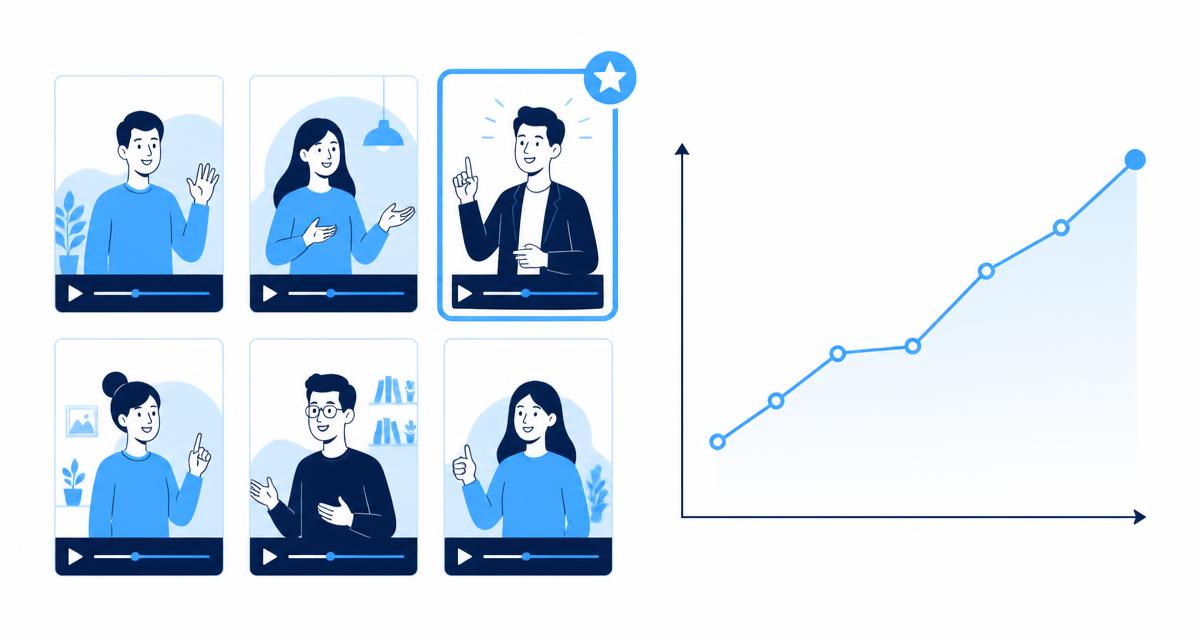
A shoot produces three ads. Testing three ads tells you almost nothing — you learn which of three arbitrary options is least bad. Testing thirty tells you which angle works, which hook stops the scroll, and which offer framing converts.
With a clone, the marginal cost of the thirty-first ad is a script and a few minutes of render time.
A testing structure that produces answers
Layer 1: angle
Test three to five fundamentally different messages: pain relief, aspiration, social proof, price, novelty. Give each angle a couple of ads. Kill the angles that do not move.
Layer 2: hook
Take the winning angle and write eight to twelve openings for it. Same body, same offer, different first line. This is where the biggest performance swings appear.
Layer 3: format
Winning hook, varied execution: talking head only, talking head plus B-roll, captions-heavy, testimonial style, demo-led.
Layer 4: iterate
Feed the winners back into layer 2. Creative testing never finishes; it just gets cheaper.
Writing ad scripts that convert
- Lead with the problem in the viewer''s words. Not your product category.
- One promise. Multiple promises read as noise.
- Show the mechanism. Why does this work? A single sentence is enough.
- Handle the top objection. Price, effort, or "will this work for me".
- Close with a specific action.
Keep it to 20–35 seconds for cold traffic.
Production notes specific to ads
- 9:16 by default, with 1:1 as a secondary for feed placements.
- Burn in captions. Ads are watched muted more often than organic.
- Front-load branding subtly — a product visible early, not a logo card.
- Vary the avatar look across variants so the same face does not fatigue the audience.
- Match the landing page. The first line of the ad should reappear on the page.
Disclosure and compliance
Advertising platforms have tightened rules around synthetic media. Practical guidance:
- Only use your own likeness, or a licensed one with documented consent.
- Do not fabricate testimonials, results, credentials or ratings. Synthetic presenters delivering invented customer quotes is the fastest route to an account ban.
- Disclose AI-generated presenters where a viewer could reasonably be misled, and follow each platform''s specific labelling requirements.
- Keep claims substantiated exactly as you would for filmed creative — the medium changes nothing about advertising standards.
Measuring the right things
Watch, in order:
- Hook rate (3-second views ÷ impressions) — is the opening working?
- Hold rate (watch-through) — is the body working?
- Click-through — is the offer clear?
- Cost per acquisition — the only number that ends the argument.
A weak hook rate is a script problem. A strong hook rate with weak hold is a body problem. Strong both with weak CTR is an offer problem. Diagnose before you regenerate.
A realistic weekly cadence
Write twelve scripts on Monday, generate them Monday afternoon, launch Tuesday, read results Friday, keep the top two, write twelve more. Repeat. Within a month you will know more about what your market responds to than a year of quarterly shoots would have told you.
Frequently asked questions
About Matt Hansen
Matt Hansen writes about AI video creation at Lyler, where creators turn a single selfie into talking-head videos.